

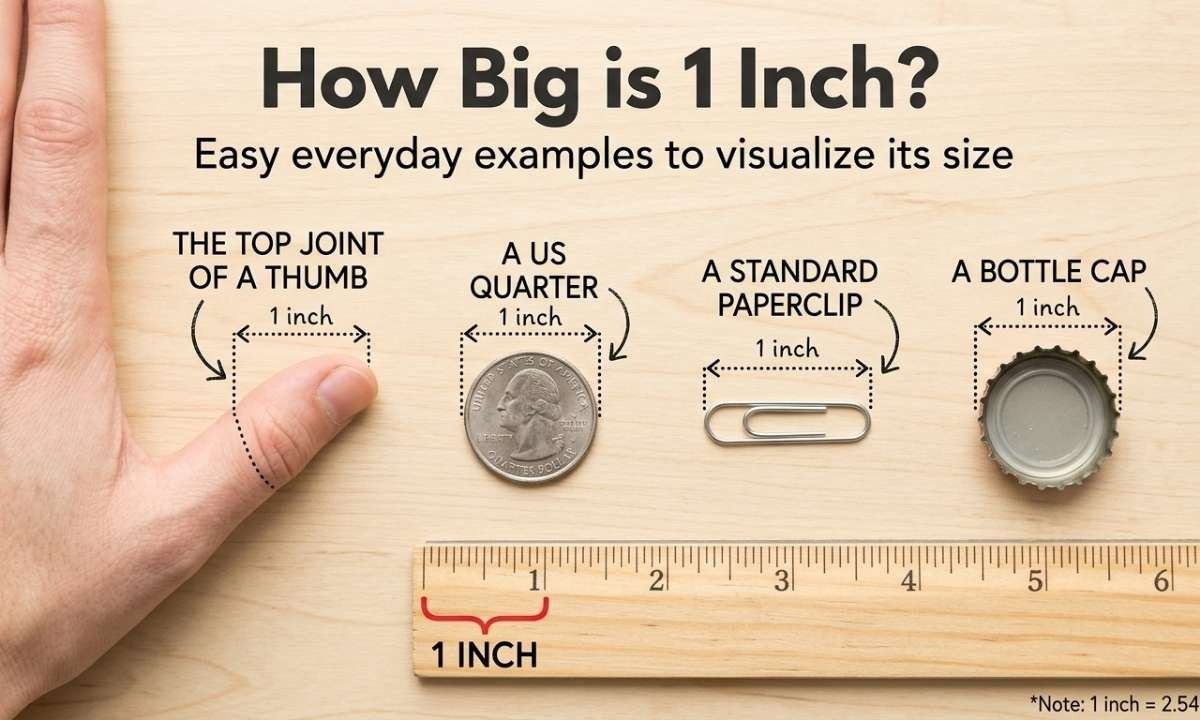
How big is 1 inch, really? On paper it is a tiny number, but without a ruler most people struggle to picture it. One inch is about the width of an adult thumb, and it shows up everywhere from screws to screens.
This guide gives you exact conversions, 20 everyday objects you can hold up for comparison, and simple ways to measure an inch with or without tools. You will also learn what an inch of rain means and how inches appear on a screen.
1 Inch Explained: Measurements and Conversions in Every Unit
One inch equals exactly 2.54 centimeters, or 25.4 millimeters. That is the official definition, agreed in 1959 and used in the United States customary and British imperial systems. An inch is also 1/12 of a foot and 1/36 of a yard.
| Unit | Value for 1 inch |
| Millimeters | 25.4 mm |
| Centimeters | 2.54 cm |
| Meters | 0.0254 m |
| Feet | 0.0833 ft (1/12) |
| Yards | 0.0278 yd (1/36) |
| Points (print) | 72 pt |
| Picas (print) | 6 picas |
Knowing the metric value helps when you shop online or read product specs from another country. If you want a fast estimate, remember that 4 inches is just over 10 centimeters.
What Does 1 Inch Look Like in Everyday Life?
Think small, but not tiny. An inch is roughly the length of the top segment of your thumb, the width of a large paper clip, or the diameter of a quarter plus a little extra.
If you ask how big is 1 inch compared with objects around the house, picture a postage stamp, a shirt button, or a bottle cap. Each is within a few millimeters of one inch.
It also helps to think in groups. Twelve of these lengths make a foot, and a standard sheet of letter paper is 8.5 inches wide.
Keep those anchors in mind as you read the list below. Matching a number to a real object is the best way to understand how big is 1 inch without a tape.
20 Everyday Objects That Are Approximately 1 Inch in Size
Some items below match one inch exactly. Others are close, and we point out the small differences. So when you wonder how big is 1 inch, find an object you own and use it as a quick reference.
1. Hockey Puck Thickness From Top to Bottom
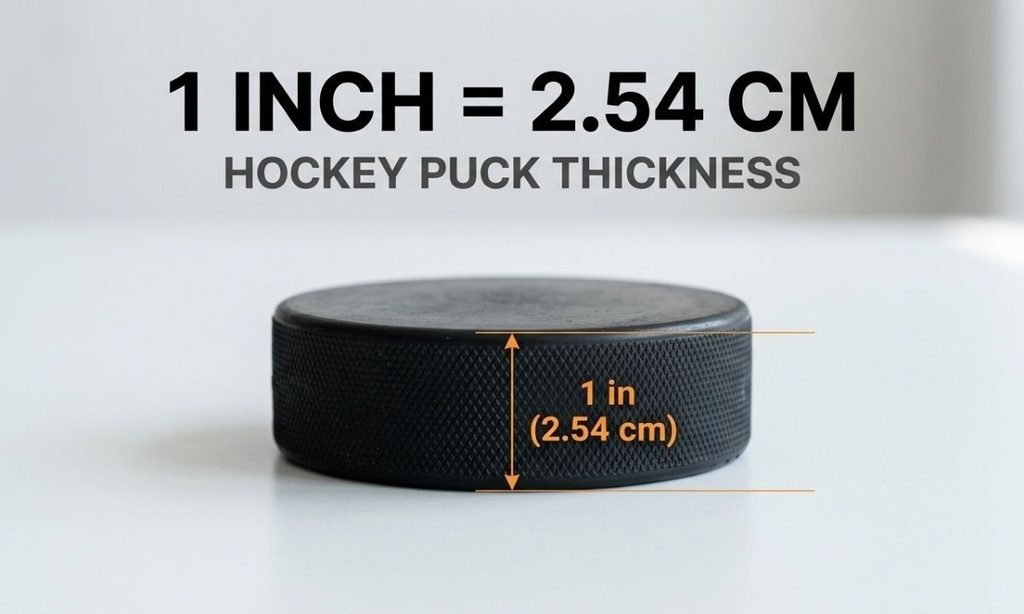
A regulation ice hockey puck is exactly one inch thick and three inches across. Lay one flat on a table and look at its edge. That edge is a true inch, which makes it one of the most reliable examples on this list.
Pucks are made of vulcanized rubber and weigh about six ounces. If you ever wonder how big is 1 inch in sports gear, this is the cleanest answer.
2. A Stack of Pennies Measuring About One Inch
A U.S. penny is about 1.5 millimeters thick. A neat stack of roughly 17 pennies reaches one inch. It is a fun way to see how many thin items add up to a single inch.
The count changes a little with coin wear, so treat 17 as a close estimate. Try it on a table and compare the stack against a ruler.
3. The Size of a Standard Wine Cork
A standard wine cork is about 0.9 inch wide, which is close to one inch across. Its length is nearly twice that. If you have a bottle in the kitchen, the cork is an easy width comparison.
Synthetic corks are often a bit thicker than natural ones. If you want a fair check, how big is 1 inch next to a cork is a question worth testing with your own bottle.
4. A U.S. Dollar Coin as a Size Reference
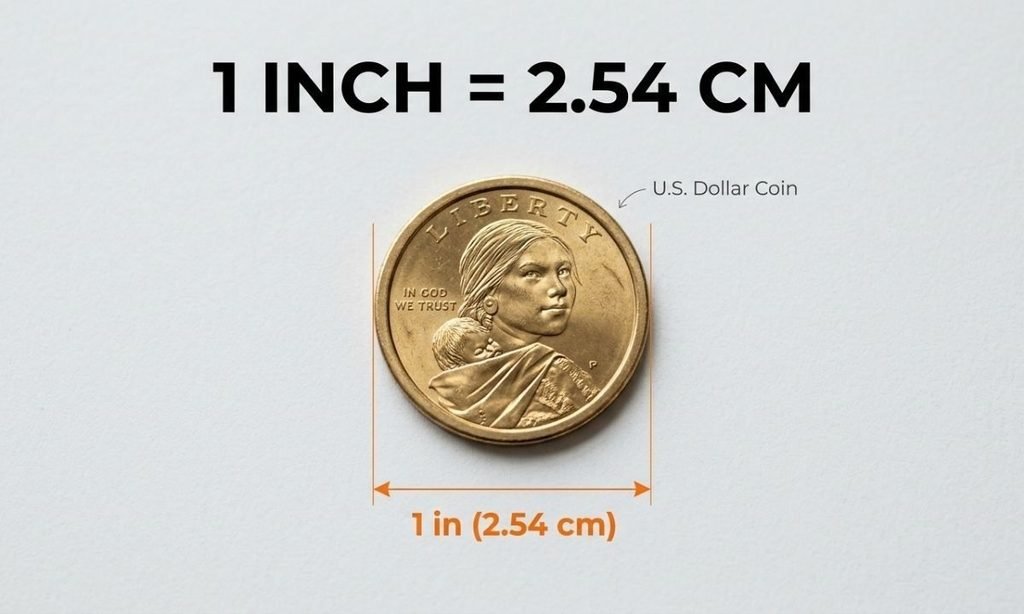
Current U.S. dollar coins measure 26.5 millimeters, or about 1.04 inches. That makes them a slightly large inch. If you are curious how big is 1 inch in your pocket, a dollar coin is a handy answer.
The gold-colored coin is thicker and heavier than a quarter, so you can tell them apart by feel. Both make good pocket rulers.
5. A Standard Forever Postage Stamp
A typical postage stamp is a little under or around one inch tall, depending on its design. Commemorative stamps vary in shape, so check yours. Most are close enough for a rough visual.
Hold the stamp against a ruler to see its real height. This is a simple way to check how big is 1 inch on everyday mail.
6. An SD Memory Card
A full-size SD card is about 24 millimeters wide, or 0.94 inch. Its length is longer, at around 1.26 inches. The narrow side is a good stand-in for an inch.
Smaller microSD cards are far tinier, at about 0.43 inch wide, so do not confuse the two formats.
7. A Shooter Marble Close to One Inch
Standard marbles measure about 5/8 inch, while shooter marbles run from about 3/4 to 1 inch. Pick the largest one in the bag. It will sit right near the one-inch mark.
Marbles are measured across the widest point. Roll the marble on a ruler edge and the match becomes easy to see.
8. A Wood Screw That Is One Inch Long
Hardware stores sell screws labeled 1 inch, such as a #8 by 1″. The length is measured from under the head to the tip. This is one of the few examples where the label gives the exact size.
A shorter one-half-inch screw would look noticeably smaller. Place them next to each other to see the gap.
9. The Width of Masking Tape
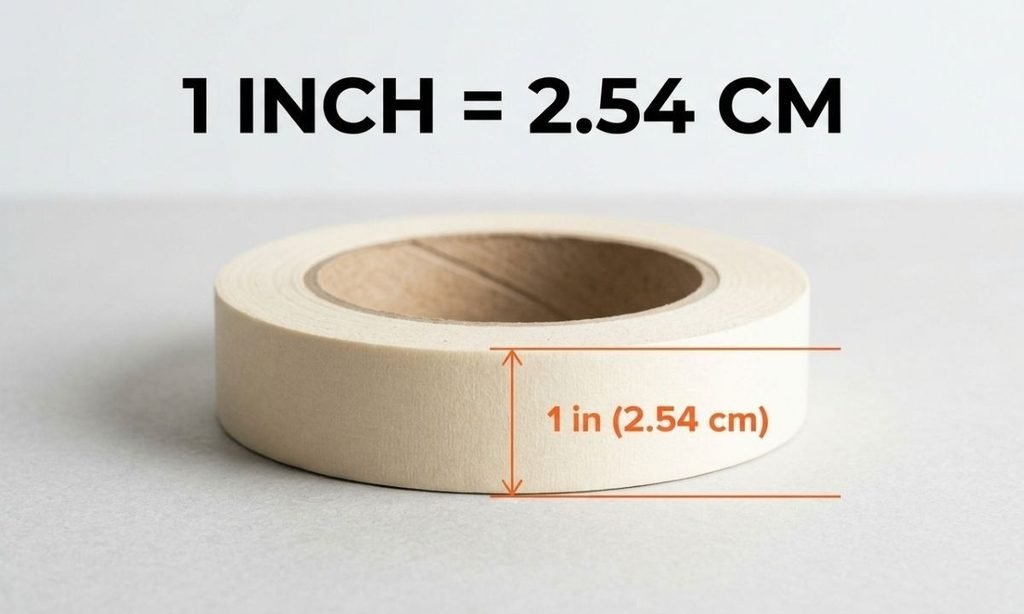
Masking tape comes in several widths, and one-inch rolls are common in craft and paint aisles. Some rolls are slightly narrower, around 0.94 inch, so read the label. A tape roll in your drawer is a great visual aid for how big is 1 inch across.
The paper edge is easy to line up with a ruler. If you ask how big is 1 inch on a craft table, the tape roll is your friend.
10. The Rings on a One-Inch Binder
A binder labeled 1 inch has rings with a one-inch inside diameter. That means a stack of papers up to an inch thick should fit. Open the binder and look at the ring to see the size in a clear loop.
Binder sizes also come in half-inch and two-inch options, so a quick glance at the spine tells you the capacity.
11. A Ribbon Measuring One Inch Across
Ribbons are sold in common widths, and one inch is a popular choice for gift wrapping and hair bows. Unroll a little and hold it up. The edges mark an inch for you.
Fabric stores label ribbon by width, which turns the roll into a handy tool for crafting and sewing projects.
12. The Tip of Your Index Finger
For many adults, the top section of the index finger or thumb is close to one inch. Hands differ, so measure yours against a ruler once. After that, you have a portable reference.
Because fingers differ, the fingertip is best used after you test it. Once you know your own measure, how big is 1 inch becomes a hands-on skill.
13. One Inch of Hair Length
Hair grows about half an inch per month on average. So an inch of new growth takes around two months. It is a personal way to see how big is 1 inch over time.
Growth speed varies by person, so the two-month figure is only an average. Barbers and stylists often use inches when talking about trims.
14. A Plump Grape About One Inch Wide
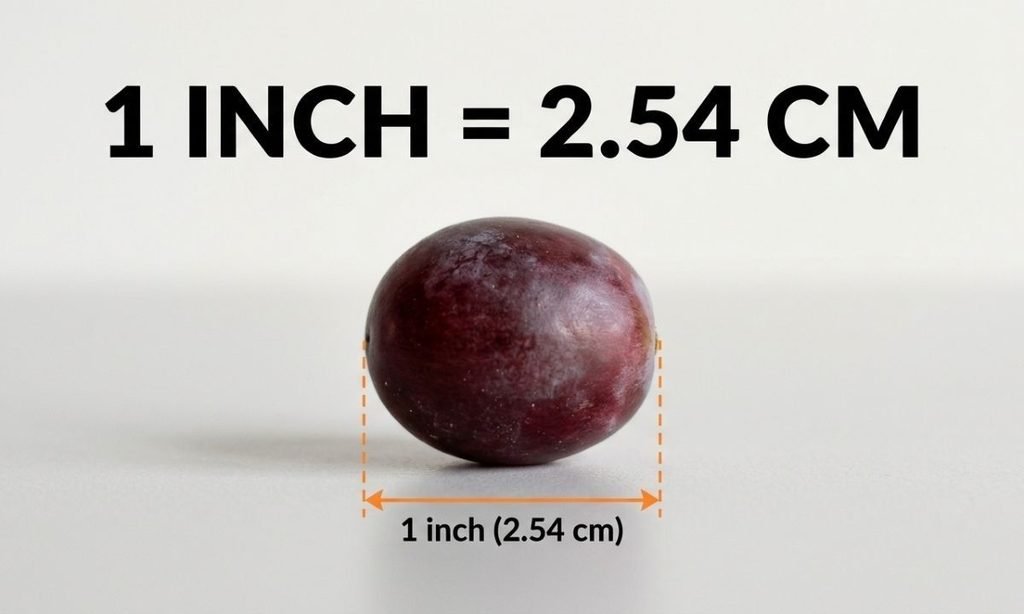
Large table grapes can be close to an inch in diameter, while smaller ones measure about three-quarters of an inch. Choose a big, round one for the comparison. It is a tasty measuring tool.
Grapes differ by variety, so use this one only as a loose guide. It is not as exact as a coin or a puck.
15. A Cocktail Ice Cube Around One Inch Across
Small cocktail ice molds often make cubes of about one inch per side. Pop one out and you hold a three-dimensional inch. The cube shows both width and depth at the same time.
Larger ice cubes of two inches are also common, so check the mold size first. A cube also shows depth, which flat items cannot.
16. A Small Padlock as a Size Reference
Miniature padlocks used on lockers and luggage often have bodies around one inch wide. Sizes vary by brand, so use this as an estimate. It is a good example if you want to know how big is 1 inch in a hardware context.
Check the label for the width in millimeters. Many small locks list 25 millimeters, which is close to the inch mark.
17. A U.S. Quarter Coin Nearly One Inch Wide
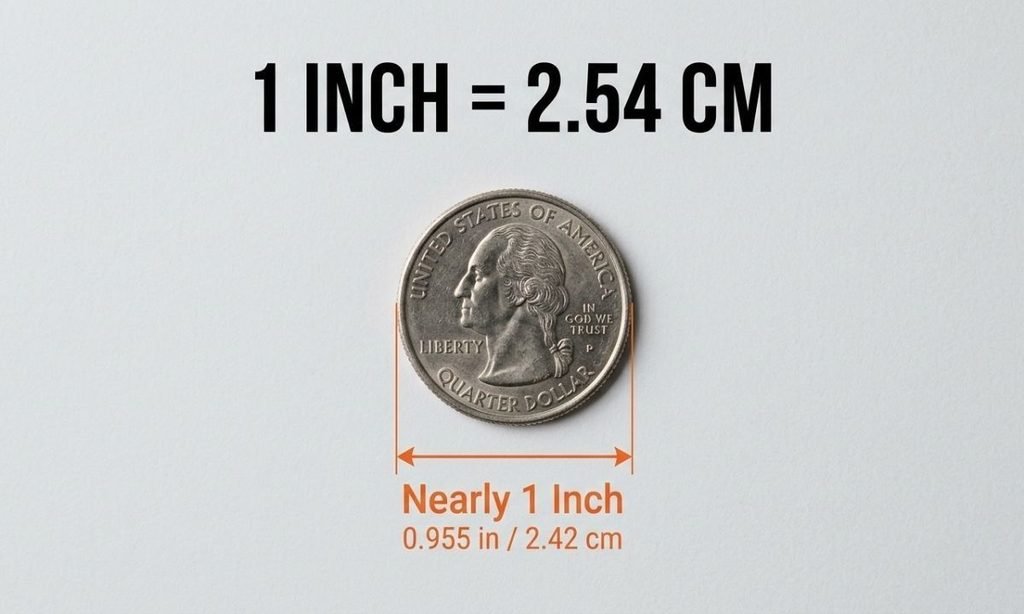
A U.S. quarter is 24.26 millimeters wide, or about 0.955 inch. It is just shy of an inch, so add a hair of space. Because the quarter is so common, it is one of the best ways to check an inch quickly.
Add about 1.5 millimeters and you have a full inch. That small gap is the reason the quarter is only a near match, though how big is 1 inch beside a quarter is a classic comparison.
18. A Domino Tile as a Size Comparison
Many standard domino sets use tiles about one inch wide and two inches long. Dimensions differ across sets, so measure yours once. The tile shows you one inch and two inches in a single object.
Different manufacturers make slightly different tiles, so measure before relying on it. The thickness, usually under half an inch, is a bonus comparison.
19. The Metal End of a USB-A Connector
The metal part of a USB-A plug is only about 0.47 inch wide, which is roughly half an inch. Place two side by side and you get close to an inch. It is a good reminder of how small ports and cables can be.
This is a half-inch example, but it fits the list because it helps you picture smaller sizes. How big is 1 inch next to a port? About two plugs wide.
20. A Large Coat Button Close to One Inch
Heavy coat and blazer buttons often measure between 25 and 30 millimeters, which is about one inch. Check the largest button on a winter jacket. It sits right at the upper end of the range.
Smaller shirt buttons are only half an inch, so look for the large kind. A big button makes for an easy visual guide.
How to Find and Measure One Inch on a Ruler
A standard U.S. ruler shows inches along one edge, usually marked from 0 to 12. The first long line after zero is the one-inch mark, and it is often labeled with a number 1.
Between the whole numbers, shorter lines divide the inch into smaller parts. Learning these marks is the first step to knowing how big is 1 inch on any scale.
- Half inch: the middle line, longest between whole numbers.
- Quarter inch: the next-longest lines, at 1/4 and 3/4.
- Eighth inch: shorter lines, at 1/8, 3/8, 5/8, and 7/8.
- Sixteenth inch: the tiniest lines, giving 16 marks per inch.
Line up the zero with the edge of your object. Read the number where the object ends. If it stops between lines, round to the nearest mark.
How to Measure One Inch Without a Ruler
You do not always have a ruler nearby. These everyday items can stand in.
- Quarter coin: just under one inch, so add a tiny gap.
- Dollar coin: about 1.04 inches, which is slightly over.
- Thumb width: many adults have a thumb near one inch across, but check yours once.
- Credit card: the short side is 2.125 inches, so one inch is a little less than half of it.
- Paper fold: letter paper is 8.5 inches wide. Fold it in half three times for about 1.06 inches.
For extra accuracy, compare your guess against a printed ruler or a measuring tape later. Knowing how big is 1 inch with your own hand makes quick estimates much easier.
What Does One Inch of Rainfall Actually Mean?
One inch of rain means water that would be one inch deep on a flat surface if it did not drain, soak in, or evaporate.
It is a standard way to report rain in the U.S. weather forecast. People often ask how big is 1 inch of rain in practical terms, and the numbers below answer that.
That sounds small, but the volume adds up. One inch of rain on one square foot holds about 0.62 gallons. Over one acre, it is about 27,154 gallons.
Snow works differently. As a rough rule, ten inches of snow melts into about one inch of water, though wet snow can be much denser.
How Big Is One Inch When Displayed on a Screen?
How big is one inch on a screen depends on the device. Screens are measured diagonally, and pixel density changes how large an image looks.
Web designers use a reference of 96 CSS pixels per inch. However, a phone, laptop, or monitor may render that differently, because the actual pixel density is higher or lower.
So an on-screen “inch” is often not a real inch. If you need the true answer to how big is 1 inch, use a physical ruler.
- Printed ruler: accurate and always the true size.
- Screen ruler: only accurate if you calibrate it.
- Print preview at 100%: a better way to check scale before printing.
How Many Centimeters and Millimeters Are in One Inch?
One inch has 2.54 centimeters and 25.4 millimeters. To go the other way, one centimeter is about 0.3937 inch, and one millimeter is about 0.0394 inch.
- Inches to centimeters: multiply by 2.54.
- Inches to millimeters: multiply by 25.4.
- Centimeters to inches: divide by 2.54.
For example, 5 inches is 12.7 centimeters, and 10 inches is 25.4 centimeters. In metric terms, how big is 1 inch? A little over two and a half centimeters.
How to Convert Inches Into Fractions of a Foot
To convert inches to feet, divide the number of inches by 12. So one inch is 1/12 of a foot, or about 0.0833 feet. This is useful in building plans and room layouts, and it shows how big is 1 inch next to a full foot.
| Inches | Fraction of a foot | Decimal feet |
| 1 | 1/12 | 0.0833 |
| 2 | 1/6 | 0.1667 |
| 3 | 1/4 | 0.25 |
| 4 | 1/3 | 0.3333 |
| 6 | 1/2 | 0.5 |
| 8 | 2/3 | 0.6667 |
| 9 | 3/4 | 0.75 |
| 12 | 1 | 1.0 |
If a measurement has feet and inches, such as 5 feet 3 inches, divide the inches by 12 and add. Here, 3 ÷ 12 equals 0.25, so the total is 5.25 feet.
Frequently Asked Questions
How many centimeters is 1 inch?
One inch is exactly 2.54 centimeters.
How many millimeters are in 1 inch?
There are exactly 25.4 millimeters in one inch.
How Big Is 1 Inch Compared to a Quarter?
A U.S. quarter is about 0.955 inch wide, so an inch is just a little wider.
What is 1 inch in feet?
One inch is 1/12 of a foot, or about 0.0833 feet.
How many inches are in a foot?
There are 12 inches in one foot.
Is a thumb really 1 inch wide?
For many adults it is close, but thumb width varies, so check yours against a ruler.
What common objects are 1 inch long?
A hockey puck’s thickness, a one-inch screw, and a one-inch binder ring all match.
How many 1/16 marks are in one inch?
A standard ruler has 16 sixteenth-inch marks in each inch.
How many inches is 1 inch of rain over a lawn?
It means rain one inch deep, which is about 0.62 gallons per square foot.
Conclusion
Now you have a clear answer to how big is 1 inch. It is 2.54 centimeters, 25.4 millimeters, or 1/12 of a foot. In daily life, it looks like a hockey puck’s edge, a dollar coin, or the width of your thumb.
Next time you need a quick estimate, pick an object from the list above and trust it. If you want to remember how big is 1 inch for good, measure your own thumb once and keep that number in mind. Small units are easy to judge once you have the right reference.